
Who is a consultant? (2)
In the previous article, Who is a consultant? (1), Bloom's learning levels inspired a review of consultants' minimum requirements. In the author's view, Bloom's sixth level—creating or synthesizing—is necessary for consulting.
Table of contents
This section examines several further consultant characteristics.
- Appropriate appearance and behavior
- Social intelligence
- Honesty and candor
- Focus
Appropriate appearance and behavior

Appropriate appearance and behavior:
This is the first thing people see and judge.
Software professionals call it UI (User Interface) and UX (User Experience).
In other words, how people see and interact with you.
Naturally, we expect
a sports and fitness consultant to be in good shape, and a management consultant to appear and behave in an orderly manner.
Appearance may be neither necessary nor sufficient, and performance may eventually compensate for shortcomings, but why occupy part of the audience's mental bandwidth with this issue?
There is no universal prescription: it depends on the consulting field and the client's organizational and working culture.
I remember a friend introducing me to a gentleman for an initial meeting; people in his office called him Haj Agha.
Afterward he told my friend that I had been very formal and polished.
Apparently he expected greater familiarity and did not connect with my UX. His preferred pace for becoming “cousins” was faster than my planned pace!
Social intelligence

Social intelligence (EQ: Emotional Quotient):
Social intelligence is one of our several forms of intelligence.
It provides skills for establishing, maintaining and expanding relationships and comprises various abilities.
Many resources discuss it, and a simple internet search provides useful information, so this article does not explain it further.
I nevertheless believe it is a key consulting characteristic. Why?
Understanding and discovering the problem is among the most important parts of problem solving.
Many solutions are hidden within the problem statement itself.
A common joke says consultants ask you questions, organize your answers and give them back. Sometimes this is indeed true!
This requires appropriate relationships with people connected to the problem, and therefore a good level of social intelligence.
Honesty and candor
Honesty and candor:
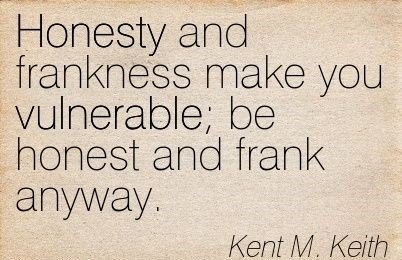
“Honesty and frankness make you vulnerable. Be honest and frank anyway.” (Kent M. Keith)
This is a curious point for which my working experience contains many contradictory examples.
Could anyone reject these two qualities in conversation?
Yet practice is different!
Surprisingly, many people do not want to hear the truth or tolerate candor.
I believe honesty and candor are the central pillar of a consultant's credibility.
In some projects, senior managers appear to seek a like-minded supporter rather than a consultant.
Someone to accompany, support and approve implementation of their intended plans.
Perhaps the role shifts here from consultant toward coach.
In any case, consultants should give clients their opinions honestly and clearly in writing, even when compelled in practice to pursue another action contrary to their view and in line with the client's wishes.
The reverse also holds.
Many employers dislike flattering consultants who agree unconditionally.
Focus

A consultant's focus matters in two respects:
1. Focus on a specialty:
Medicine offers an analogy.
Its ranks include general practitioners, specialists and subspecialists.
General practitioners identify the area of illness and direct patients to the relevant specialist.
Specialists refer patients to subspecialists when a particular diagnosis or treatment is uncertain or the risk is high.
Consultants are likewise expected to recognize and respect these levels.
2. Focus on the project:
Because continuous presence on one project is unnecessary, consultants can participate in several projects simultaneously.
This requires care: above all, multiple simultaneous projects must not destroy focus on the consulting work.