
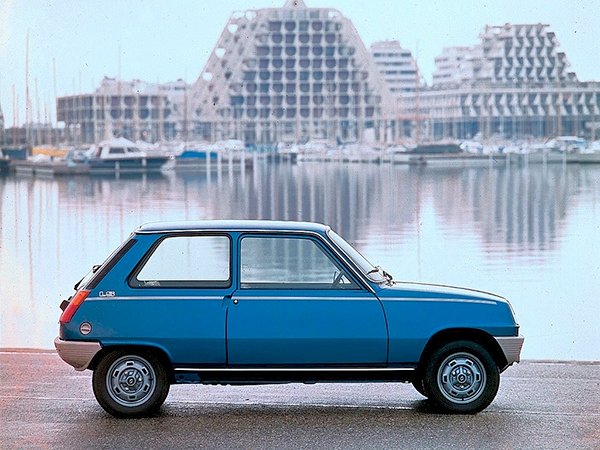
The Renault 5 Radiator Syndrome and Car Manufacturing!
When I worked in the quality department of the auto-parts industry, we encountered a problem on Iran Khodro's assembly line. A component made of zamak, a zinc alloy, would sometimes break, crush or deform when it was mounted on the car and tightened to the specified torque.
We investigated the problem with the raw-material supplier several times and repeatedly had metallurgical laboratories examine the material, but no problem was found.
Eventually, I sent one of our quality-control inspectors to the workshop providing die-casting services and asked him to supervise production of the component for several consecutive days. The results were interesting.
First, I should mention that at the time, Iran's raw-material market called zamak "dry lead." I do not know where that name came from, but it caused many problems, because zamak had nothing to do with lead. It was an alloy of zinc and copper, with only a negligible amount of lead as an impurity.
Now let us turn to the observations and report of our quality-control inspector, Mohsen:
- The die-casting workshop was a service business that performed die casting for customers on a fee-for-work basis.
- On the first day, Mohsen noticed that the melting crucible, the container in which raw materials are placed to melt, was already approximately 10 percent full.
He asked what was in the crucible. They said, "Before your job, we were making angle valves, the small valves usually used under washbasins, and some of their raw material is still in the crucible."
In the past, angle valves were commonly made from lead.
Our dear worker had poured the sensitive, valuable zamak ingots into a crucible that was 10 percent full of lead, creating a new alloy without our having the slightest idea!
This made the products in that batch softer than the standard allowed, so they were crushed and deformed when tightened onto the car.
I asked Mohsen, "Sometimes, when we encountered this problem and told the workshop, they fixed it in the next delivery. How did they do that?"
With a smile covering his whole face, Mohsen replied, "As it happens, I had taken the component's assembly-simulation tool to the die-casting workshop. I tested the die-cast component and showed the workshop manager what the lead in the crucible had done to it."
The workshop manager replied, "That is no problem. We will fix it now."
He called his worker and said, "Throw 2 Renault 5 radiators into the crucible!!"
Astonished, I asked, "What is this about Renault 5 radiators?"
Barely holding back his laughter, Mohsen replied, "According to the workshop manager, Renault 5 radiators are made of aluminum. Whenever the output becomes soft, they add some Renault 5 radiator material to harden it a little!!"
Apparently, that day they used trial and error, repeatedly adding lead and Renault 5 radiators, until they obtained an output that performed acceptably on the assembly-simulation tool.
But I was stunned, with a bitter taste in my mouth, and could no longer hear what Mohsen was saying. I was mentally reviewing the past few months, our arguments with the supplier and the enormous sums we had spent on different tests and investigations.
The zamak producer had explained that alloy production was a highly precise, sensitive and time-consuming process. The raw material had to remain in the furnace for around 48 hours to achieve the mixing and homogeneity needed to deliver a suitable alloy to the customer.
Yet the die-casting workshop had created, in an instant, a new alloy that I do not even know what to call: a mixture of zamak, lead and Renault 5 radiators.
That was a cold shock, and I realized why we cannot make high-quality cars. It is impossible until the entire supply chain, down to its very last and lowest tier, properly understands the subject, receives the necessary training and establishes the structure needed to create a quality product.
The trader needed to understand that zamak is not lead, whether "dry" or "wet."
The die-casting workshop needed to understand what an alloy means and that it could not produce a new alloy in a fraction of an hour.
A product's quality depends on the performance of its entire supply chain.
The supply chain of a car with around 5000 parts, 700 direct suppliers and hundreds of thousands of directly and indirectly employed people amounts to an entire country.