

Studying and Examining the Career Experience Indicator
Questions:
- Is career experience a sound indicator, and is it really useful?
- How should we measure this indicator?
- Where does the required amount of experience for a job come from before it appears in a recruitment advertisement?
- What is the experience saturation point?
Answers:
- Career experience is one of the most complex measures or indicators we may encounter.
I recognize it as a management tool, but using it correctly and appropriately has its own complexities, as with every other management tool.
Over my working years, I have seen a considerable number of people with well-stocked toolboxes who did not know how to use the tools correctly and harmed themselves, their organizations and others with them.
I liken these people to the tool sellers in Tehran's Hassan Abad Square. They may know what a tool is used for, but do they know how to use it? That is uncertain.
Let us examine the components that a career experience indicator might contain:
- The complexity of the job
- Decision-making ability
- Risks or hazards associated with the job
- Teamwork
- The effect of age
- Problem-solving ability
- Understanding the job
- Receptiveness and flexibility
- Continually updating what has been learned
- Ability to diagnose
- Depth and breadth of perspective
- The experience saturation point
2. As noted in a separate article, measuring the length of experience can be misleading. Likewise, frequent job changes considered on their own, without examining the nature of the job and their positive or negative effects on experience, may give us an incorrect picture.
In fact, we need to be able to measure the effect of experience. What has been gained during the time spent in a job, regardless of the number of moves?
To make it easier to remember, I call this, briefly, "the area of experience": what has been gained across the length and breadth of experiencing work.
For this purpose, the following checklist is suggested to help measure career experience.
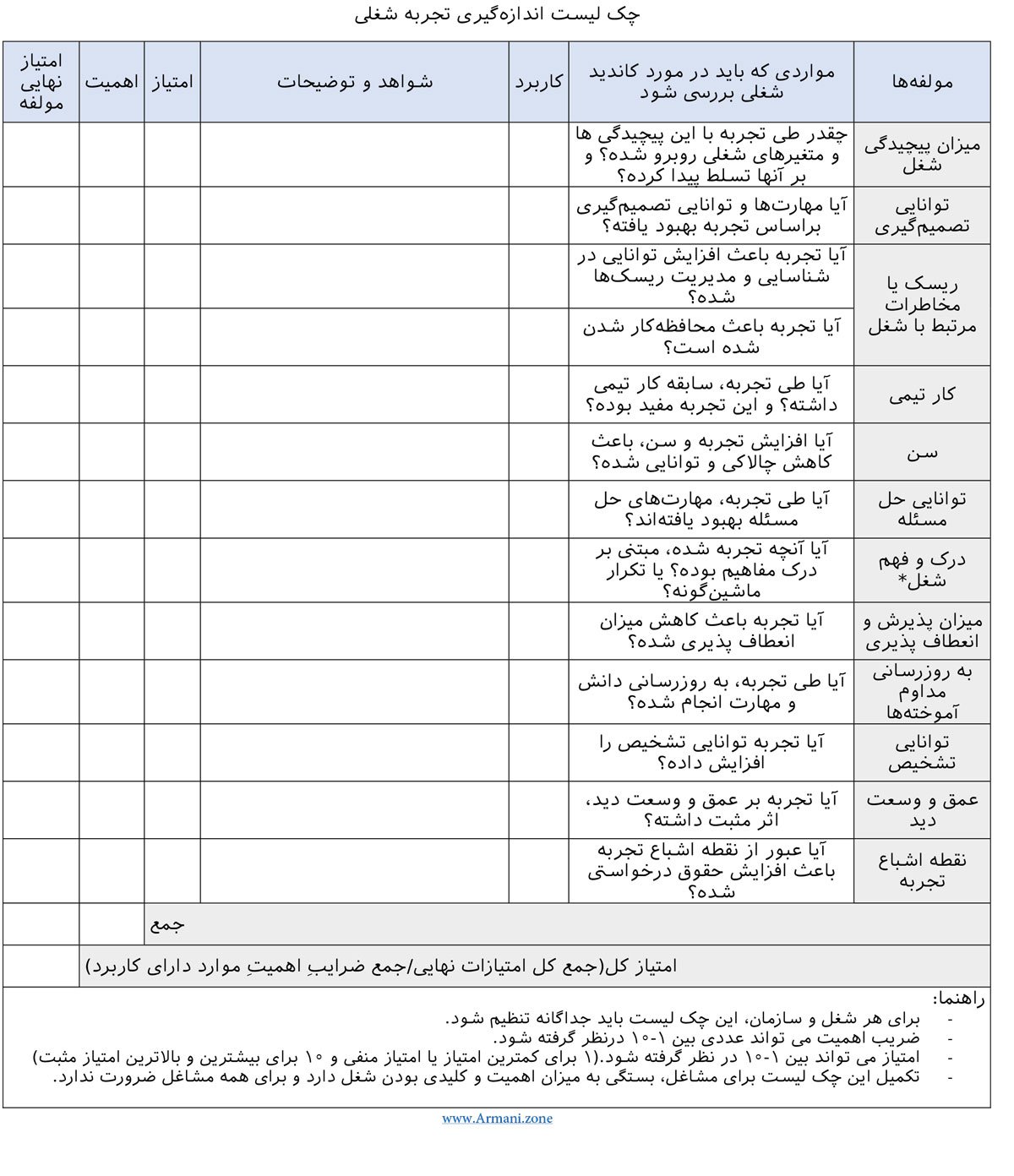
3. When a recruitment advertisement specifies the required length of experience in years, perhaps the advertiser anticipates or expects the applicant to have gained experience at a uniform breadth throughout that period.
Ultimately, however, the recruiter is supposed to discover the answer during the job interview.
But where did that number itself come from? I do not know!
What Is the Suggestion?
The same career-experience measurement checklist can be used to determine and equate the minimum amount required.
4. The experience saturation point is the point beyond which no substantial new experience is expected to be gained, and additional experience creates no value for the employer.
Some jobs, such as shop cashier positions involving repetitive, routine work, reach the experience saturation point sooner.
Postscript:
- With each day added to our age and experience, and as we encounter new uncertainties, we learn to use the expression "in my opinion" more often.
- No universal prescription or verdict can be issued for the career experience indicator.
- Mr. Pouya Ahmadi's LinkedIn post encouraged this article, or rather, my opinion.
- For further explanation of the "understanding the job" component, I suggest reading this article .